Friday, April 23, 2010

Guest Post by Jennie Shortridge: How to Host an Author at Your Book Club Meeting (Not!)


Let us begin by saying book groups are doing more than anyone to save the publishing industry, and I, for one, love you all. Unequivocally. I will do anything I can to help you have a great meeting when you choose any of my books for your group to read and discuss. I’ve now attended well over a hundred, either in person, by phone, or on Skype.

I’ve made cookies, brought wine, called from my car (hands-free!), sent signed book plates, CDs of music inspired by the book, recipes that come from the book, galleys of my yet-to-be-published books, and generally tried to make myself useful to you. Why? Read the first sentence. And also because we who love books and reading have a certain kinship, a knowing between us. Books can save the world or just your soul on a lonely Wednesday night, and those who get it, get it.

It is with tongue planted firmly in cheek that I offer you, oh dear book group people, this list. It was way too much fun to write, and I hope you understand that I am so very kidding. I love you, I do.

Jennie’s Snarkalicious Step-by-Step Guide for Hosting Authors at Your Book Club Meetings

1. We writers are a happy-go-lucky bunch with not much on our schedules. Writing, after all, is really just sitting around eating bonbons and making stuff up. It’s always best to extend your invitation as close to the actual meeting date as possible. This week? Sure! Tonight? Why not?

2. If the author lives over forty-five minutes away, of course he or she will drive to your home. No need to gather your members and find a nice restaurant in the city, of course not. We like to drive. At night. In the suburbs where every street has the same name. We consider it research.

3. Writers are generally extroverts, which is why we sit in front of computers all day, alone. When an author attends your meeting in person, there’s no need to make introductions. Just take our coat and shove us into the middle of the room so that others may gawk, whisper “Is that the author? I thought she’d be thinner/prettier/younger.” We love that sort of thing.

4. We have no need for food or drink. Even if you’re having the meeting at dinnertime. Ritz and celery sticks? Fabulous. We really should have eaten at home anyway before coming at, what time is it? 7:00? Right. Um, maybe just an olive or two.

5. And of course, we have no time limit as to how long we can stay. Go ahead and talk about your children’s latest cute escapades for that first hour or so. We will nod and smile, even though we don’t know your gifted Ashleigh from her little Robby with ADHD. He did what to a cat? Oh, how amusing.

6. If we’re doing a speaker-phone meeting, by all means, use your inexpensive mobile flip phone, set on a dining room table with twelve chatty women gathered around it. The clarity is less than desired, but the enthusiasm more than makes up for it. Especially after the first glass of wine.

7. Here are the questions we enjoy the most:

a. How much do you make as an author?
b. I’ve written a book, too. Can you send it to your agent for me?
c. Do you have a real job?
d. Why did so-and-so do this-and-such in the story? That’s never happened to me, so I totally didn’t buy it.

8. Here are the questions we hate:

a. What inspired you to write this story?
b. When so-and-so did this-and-such, I wasn’t sure why. Tell us what your intention was with that scene.
c. What other books have you written that we might like?

9. When it comes time for the author to sign books—which we really do love doing as a way to thank you for supporting us and your local booksellers—make sure the vast majority of your group has either, A. shared the same book, or B. checked them out from the library. That gives us a warm happy feeling inside that you are not wasting trees.

10. We don’t require thank yous or nice little gifts. Really! No, no, take back that nice note, that card, that box of chocolates. It’s been such a swell (gurgle, squelch, gurgle) evening (well, make that night as it’s after ten), that I really—What? We’re not done? Oh, okay, maybe one more story about little Robby.

Yes, I know your group would never do any of these things, and if you did, I would still love you, just as a wife still loves the husband who leaves the milk out and the kid who forgets to say “Thanks, Mom,” for help with his homework. We were meant to be together, book groups and authors, and you can always find me at jennie@jennieshortridge.com.

www.jennieshortridge.com

Wednesday, April 21, 2010

Guest Post by Jennie Shortridge: Will Work for Meaningful Contribution to Society

We writers are an odd bunch. We choose lives in which we sit alone all day in front of computers. Not in cubicles, not in rows of other computers, mind you, but completely, entirely alone. All day. Did I mention every day?

Now, this is fine if you’re deep in the “introvert” range of the Meyers-Briggs scale, but for those of us who nose over the line into the “extrovert” category, it can get a little lonely.

Lucky for me, I live in Seattle, a holy grail convergence zone for writers. Sure, the Pacific Northwest is dark and dismal nine months each year, but it’s excellent (either in spite of or because of all that moisture) for quite a few things: coffee, music, natural beauty, bookstores, and many of the authors that fill those shelves.

When I first moved here five years ago, I didn’t know a soul, but that didn’t last long. I met Garth Stein (before the dog book) at an event we were both reading at, and liked him immediately. It’s hard not to—he’s pretty much the most likable guy on the planet. As writers are wont to do when frustrated by writing, we met for coffee. It became a regular thing, and soon other writers were joining us. Before long, there were seven of us.


What is now formally called Seattle7Writers, an awareness and fundraising nonprofit comprised of over 20 published authors, started simply as a coffee klatch, a kvetching, laughing, celebrating bunch of friends who got what each other was going through on a daily basis. We could clink to the good stuff—a good cover, a manuscript turned in—and offer condolences on the not-so-good stuff—a delayed pub date, a request for massive revisions, even sometimes the “orphaning” of a comrade (the state of an author whose agent or editor has left for greener pastures in another company).

The core seven now gather monthly for business, and by business I mean juggling the demands of putting on several fundraisers at a time, collecting and distributing donated books for pocket libraries throughout our community (in shelters and prisons), and the myriad other requests we receive and ideas we generate.

One of our aims is to energize and connect reading communities. We provide book groups with ways to connect with us, offering ourselves up to attend meetings by phone or Skype, or when possible, in person. We put on events at bookstores and libraries where book groups can come and chat with several authors at a time, perhaps get to know authors in the community they weren’t already aware of, and of course, support those local booksellers and libraries. And, yes, we ask for charitable donations at these events, or deduct it from the price of books. This year, our fundraising efforts are supporting a wonderful program in Seattle, Writers in the Schools, a residency program that puts real writers in schools, helping kids write.

It’s exhausting, and it’s amazing. Groups of writers in other cities are now considering organizing as well, the most lovely tribute of all to the work we do.

Lest you think we’re workaholics, the entire group is invited quarterly for social time, that precious couple of hours where we laugh hard at our stumbles and mourn together over titles not chosen, readings ill-attended. If not for the company of these writers, we’d all still write. We’d still publish and tour and do the work we do. We just might not be as happy, or as fulfilled.

www.jennieshortridge.com

Saturday, April 17, 2010

Guest Post by Jennie Shortridge: What Does the Truth Have to Do with Writing Fiction?


When working on my first three novels, I toiled in the garden of personal experience. I wrote about a mother’s war with mental illness and a singer-songwriter daughter who never quite achieves success in Riding with the Queen. I wrote about a food magazine writer who is dissatisfied with the drivel she must produce to pay the rent in Eating Heaven. I wrote about a woman at midlife who can’t quite understand her body or her emotions in Love and Biology at the Center of the Universe.

Even though these details are inspired by my own life, I didn’t want to write thinly veiled memoir or fictionalized autobiography, or even a roman a clef. I just wanted to use bits and pieces of my experience to build stories with verisimilitude. (Kinda like putting your life in a blender, adding a bunch of other ingredients, and pouring out a big old made-up smoothie.)


When it came time to write the fourth book, When She Flew, I was ready to do something different. For many years I’ve collected news clippings of stories that fascinated me. One story kept surfacing, that of a Vietnam vet raising his young daughter in the woods near Portland, OR. Though a Seattle-ite now, I lived in Portland in 2004 when the pair were found by police and brought out of the woods, and I was mesmerized, wondering how it would all play out.

I loved how the very blue-state city of Portland reacted: the citizenry pitched in for a college fund for the girl, raising some $10,000. The girl was not placed in foster care, as one would imagine, nor was the father charged with child abuse or neglect. The police sergeant who took them away from the system and to a shelter instead was lauded in the press.

The events raised so many questions: why did the sergeant go against protocol? What was different about this particular case and these two people? Was the girl really being looked after sufficiently? Through continuing news stories, we learned that she was home-schooled by the father and, at 12 years old, reading at a 12th grade level. A physical exam determined she was healthy, not abused; she didn’t even have any cavities. She was clean and seemingly happy and articulate, even though she lived in a lean-to in the forest.

For me, good stories arise from questions. As a former magazine features writer and generally curious person, I love research. I emailed the police sergeant in Portland and introduced myself. I told him I loved the story, and I appreciated what he did for the father and daughter. I told him I wanted to write the story, but as a novel. In his short reply, I could feel him scratching his head. “Let me come to Portland and buy you lunch,” I wrote back. If I could just talk to him, I thought.

A week later I caught the train to Portland. Inside the darkened restaurant sat just one other person near the back. He was oh-my-god tall, broad-shouldered, shiny bald, wearing dark glasses, a dark suit, and sporting a holster shaped bulge beneath his jacket. He scared the crap out of me.

By the end of lunch, we were simpatico. The events from 2004 were still very much on his mind. Over the next year, I met with him several times in Portland and emailed and called him with questions while writing. Getting the details of police procedure and forest setting were the fun parts of the process. He even took me hiking to the encampment one hot summer day, the best research I could have hoped for, complete with the ghosts of the characters swirling about and a red yo-yo pulled from the earth beneath where their lean-to had been.

What I didn’t realize when embarking on this book, however, was how difficult it would be to figure out which truths to tell, and which not to. As with my first three novels, there were people I wanted to protect, or at least not insult. I had a fierce, almost maternal instinct to protect the real girl. It drove me to rewrite, scrap certain elements, go back and disguise other things. I wrote characters as different from the real ones (easy, having never met the father and daughter) in as many ways as I could. The sergeant morphed into a Hispanic single mom cop who was not in charge at all, and had even more hurdles to face in doing what she thought was right for the father and daughter. Even the city of Portland became a fictional city to obfuscate the routes they took, and the implied location of their encampment.

In the end, it was one of the most satisfying writing experiences I’ve had, and people like the book. I like the details and drama I infused, using imagination to create a media gone wild (well, that doesn’t take too much imagination) and an underground movement that helps those in need.

At readings, though, I’m often asked a question that haunts me:

What if the real girl reads the book?

I have no answer for that question, only a twist in my chest, and hope that she will understand my need to write this story.

http://www.jennieshortridge.com/

Friday, April 16, 2010

Jane Austen, Harry Potter, and a Bit of Both


After a college friend, currently an English professor, gave birth to her second child, she lamented to me, “These days, I’m too sleep-deprived to read anything in the evenings but mysteries and regencies.”

Well, I knew about mysteries; I love early 20th-century detective novels, and I consider Dorothy Sayers to be the gold standard. (I read her translation of Dante at Stanford before I knew she wrote mysteries.) I knew about true sleep deprivation, too, since I had a preschooler and an insomniac baby at the time. But what were regencies?

“Regencies,” answered my English professor friend, “are for those of us who are unhappy about running out of Jane Austen novels.”

Delightedly recognizing myself in this intriguing statement, I set off in search of regencies. I mean, how many times can you reread Jane Austen’s six novels? I happily investigated this whole new genre for awhile before realizing that, with few exceptions, Georgette Heyer wrote the only really good ones.

Don’t try Heyer’s serious historical novels – they’re abysmal. But her regencies, written with effervescence and humor in the early part of the 20th century, are like lighthearted, frivolous Jane Austen novels, replete with the kind of airy witticisms I always wish I could produce at will (except that on the rare occasions that I do, I get queer looks, because – let’s face it – nobody talks like that anymore) and vivid, funny character sketches in the bigger context of class-bound Regency England. As romantic social comedies go, these are charming.

Heyer’s 1920s mysteries are well-done, too. The plots do not rival the sophistication and complexity of Dorothy Sayers or Agatha Christie, but Heyer’s holistic product of social mores, social satire, witty repartee, and elegant writing make for satisfying reading. Why Shoot a Butler? is typically ironic from its title to its ending. I love her mysteries, but I laugh out loud reading her regencies.


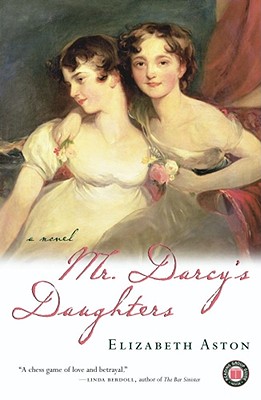
Elizabeth Aston writes "continuations" of Jane Austen's Pride and Prejudice


Now, what if you combined Jane Austen’s Regency England with Harry Potter? You would get Susanna Clarke’s Jonathan Strange and Mr. Norrell. Clarke writes of an original, fascinating fictional world, yet it’s her prose that I love. I have rarely read popular prose that is as deeply beautiful as Susanna Clarke’s. Yes, she has some serious plotting issues, but her writing and her characterization and the epic quality of her novel are a joy to read. Even her footnotes are a delight. (How often do footnotes make you laugh out loud in admiration and humor?) This is a jewel of a book; if she had woven her threads better and tightened the denouement, she would have had a masterpiece. It’s enough of a good yarn that the 800-some pages will rush by. But it’s better, by far, to savor them.

When I first explained my bedtime reading criteria in Monday’s blog, I began with Possession as a book that satisfied it all. So it’s only fitting that I finish with another writer who satisfies everything I want from any book. I first read Henry James’ “The Beast in the Jungle” when I was nineteen years old, and I stayed awake long into the night because I couldn’t put it down, so riveting it was. Henry James never had to resort to cheap tragedy or specious violence to achieve depth. His stories are mesmerizing and wrenchingly profound without ever leaving their commonplace settings. The Turn of the Screw and Other Short Fiction has it all – psychological suspense, a ghost story (or is it?), a love story, and an intensely incisive evaluation of the human psyche, all bound together in some of the most magnificent prose ever written.

My husband always rolls his eyes when I rhapsodize about Henry James. But no blog about my favorite reads – whether fluffy or serious or escapist – would be complete without a mention of him. When I write The Great American Novel, I could do worse than use James for a model.

In the meantime, I hope you’ll consider my current book, The Muslim Next Door, for your nightstand, as well. Admittedly, it’s academically reliable information on what Muslims believe and practice (I have a degree in Islamic law), but it’s also written for the bedside table. I wrote it for those of you intellectually curious people who are somewhat tired by day’s-end and want a bit of learning and a bit of entertainment rolled into one engaging, fun-to-read book about the world's second-largest religion.

Happy bedtime reading!