Monday, December 28, 2009

Guest Post By Jeanne Althouse: Writing Jasmine Man--One Writer’s Process

I know from my writer friends that the process of writing fiction is very individual. Some writers get ideas from the news, others from family stories, but I am often inspired by my dreams and use them to write short-short stories. Here is what happened one morning early:

That night I dream about an old man. His face is marked with liver spots and folds of wrinkled skin. His neck has disappeared into rolls of fat. Suddenly he grows backwards, to a time when he is young and fresh, with slender hips and smooth skin. I feel the excitement of spring, of romance. I want to touch him. When I reach down between his legs, I grasp a package of flowers. My hand folds around the petals; the perfume is released.


When I wake up, I smell jasmine. It is the vine on my deck, its fragrance coming through the open window. Or is it? The window is closed. I roll out of bed, reach for my robe, walk downstairs, make a cup of Earl Gray, and sit with my writing journal. Bits of the night dream are still clearing out of my mind, like wisps of clouds passing. I start:

6:35 a.m. 3-18-09 Old man. Vine.

I write down the time because I make a deal with myself that I have to keep writing for at least 30 minutes. The date and subject help me find my notes, if I ever need to. An old man, a vine: As I try to put together these two unrelated images in my head, I know writing about them will stretch my brain, force me to find new connections, exercise my action verbs, even if I don’t find a story. I start writing.

The jasmine man…

I like those words together. A musical sound. I say it out loud: jasmine man… I wonder: is he half man, half vine? What does he look like? I look down at the page. Keep writing.

The vine grew up his leg, wrapped around his middle and glued its fierce tendrils into his belly button…

Glued? Don’t like that word. Doesn’t feel right. I suck the end of the pen. I think about how dew covered leaves feel against my face, like the wetness of a man’s tongue in a deep, long kiss. That is definitely more interesting than how a vine grows. I put the pen back on the paper: never cross out, just keep writing.

In spring the ladies buried their noses in his white petals, soft as cloud, and some, intoxicated, kissed his leafy lips.

Now this sentence I like better—the sss sound echoes from petals to soft to kissed and I like how leafy lips rolls off my tongue, feels kind of like kissing. I say it again leafy lips. Okay stop reading out loud. Figure out what happens. Keep writing.

As summer progressed, the roots thickened around his feet, and their endings secreted themselves into the sole of his foot, crawling up his veins and arteries, searching…

I don’t like progressed. Sounds like a science essay. Fix it later. But the rest is interesting; the vine crawling up his veins and arteries…will his vine strangle him from inside his body? Or is vine man just getting old? Don’t stop to think. Keep writing.

By July his leafy girth had grown wide, giving him an obese look, a man of wide tee shirts, baggy pants, disappearing neck, and a waddle walk…

How will the ladies feel now about kissing an old man’s tongue? Ugh. Even his papery thin cheek with its folds of winkles? My pen hovers above the page. I force it down on the paper. Keep writing.

The jasmine man, no longer in bloom, with a pot belly of tangles drooping over his thin, bony stems…his leaves wilted and browning, he yearns…

***
It was an especially good writing day; I finished the whole story in one sitting that morning, although there was lots of editing later, including helpful suggestions from Aggie, my writing group and the editor Whitney Steen, at Pindeldyboz. If you want you can read the finished “Jasmine Man” at http://www.pindeldyboz.com/jajasmine.htm

For these short-short stories my idol is the writer Lydia Davis. My favorite writing book is—not surprisingly—From Where You Dream, by Robert Olen Butler. I’m constantly grateful to my once-a-month writing group and to Aggie and the writers at Kepler’s who help me decide which of my stories are keepers.

No matter where the ideas come from, the most valuable thing I’ve learned about the first draft process is the most simple: keep writing. Anywhere, anytime, anyplace. Every writer says the same. Keep writing. Something good will happen. Just keep writing.

Happy New Year!

Wednesday, December 9, 2009

Robin Black Guest Post: Shaking Up The Workshop


Many thanks to Aggie for inviting me to post! It's a real honor. First, I want to introduce myself. I'm a fiction writer and my first collection, If I Loved You, I Would Tell You This, is coming out from Random House in March. There are ten stories in the book and it took me eight years to write. I always tell people that because, early on, if anyone had told me it would take that long to finish a collection I would have thought either a) that they were crazy or b) that I must be crazy to be doing it. But it turns out that eight years isn't even a weirdly long time for a book - and I think that's important for writers to know from the start. If it's taking a lot longer than you had imagined or hoped to write even an individual story, it may be because you're doing something right.

On my mind today is the subject of the feedback writers get along the way. I think I'm focused on that because next month I'm returning to classroom teaching - undergraduates - after two years of taking private students and teaching one-on-one. This means that I have to face the dreaded workshop again. I say 'dreaded' because though I see a lot of advantages to the workshop format, I also think it has a pretty impressive capacity to do more harm than good. Here's how I see it: As a teacher, at the heart of my commitment to every student is the goal that after our work together, she will be even more excited about writing than she was before she met me. There's a lot more to teaching than that - I'm a total craft nerd - but without that increase in enthusiasm and commitment, I haven't done my job. And workshops, with their emphasis on on perfecting individual stories, their potential for competition and their drive toward consensus can all too easily have the opposite effect. So I have been thinking about ways to shake the format up - and I'm hoping that some of these thoughts will interest those of you who are in workshops now.

One big change I'm introducing is that for the first few classes we're going to workshop early drafts of stories by people who aren't there - friends of mine. I want to give my students practice critiquing and teach them skills for doing that, without risking the feelings of anyone in the room. I want the freedom to discuss a problematic piece frankly and consider strategies for the best, most helpful ways to present those concerns to the author - without the author there. The process of translating a private response to a story into a useful comment is a complex one. Knowing how to do that isn't something we're born with - but I'm hoping it's a skill that can be taught.

I also want my students to see that the main benefit of a workshop is not having your own work critiqued, but learning from reading other people's. That had better be the main benefit - if you have ten people in a workshop, each will spend 90% of their time critiquing and only 10% being critiqued. And I think that's fine, because there's a huge value to reading work in early drafts. Don't get me wrong, I also think that studying how gifted writers accomplish what they accomplish is a crucially important thing to do. But looking at significantly under-realized work can be at least as instructive. I have many bad writing habits that I never saw until I encountered them in other people's work, if only because I was too close to my own to have much perspective at all.

I mentioned that another tendency of workshops is to drift toward consensus. In my view, that's a particularly insidious danger because one of the most important lessons for any writer to learn - and for some of us it takes a long, long time - is that there will always people who don't like our work. There are people who don't like Hemingway, Woolf, Austen, Faulkner and on and and on. Having detractors is inevitable. Yet when we're in a workshop, we want the approval of the group - sometimes even more than we want advice. So, along with using my anonymous drafts to illustrate that inevitably participants respond more and less positively to particular works, I'm going to ask that each student be honest with herself each time about whether she feels connected to the author's basic intent, and if not, to consider playing a smaller role in the discussion. Years of experience have taught me that people who respond positively to a piece are almost always more helpful to an author than people who don't - which makes a certain amount of sense, though too often in workshops it's the most negative who speak loudest.

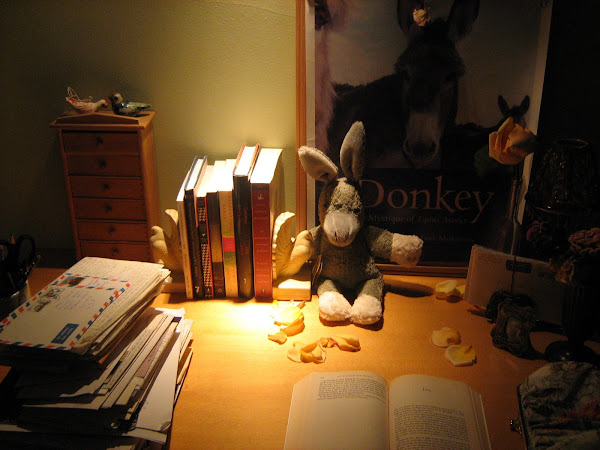
I hope some of that gives you all some food for thought. Again, thanks so much to Aggie for inviting me to visit this blog! Oh, and the picture above is just a reminder that every writer needs someone in their life who will never critique their work. . .


Thursday, November 19, 2009

Marie Mutsuki Mockett Guest Post: Advice for Writers

Last month, at Wordstock, Portland’s marvelous gathering for writers and readers, I taught a class on “The True Business of Writing.” I took about 30 class participants through the thorny parts of my career, trying to show them how—creativity aside—I got to the point now where I have a book. I told them that there were plenty of other places where they could go to discuss craft, and the art of writing. I wanted to talk practicalities, the things that no one really wants to discuss.

I showed them my original query letter.

I had asked my agent for query letters she'd rejected from her slush pile and shared these with my class, asking them to try to point out the predictable errors the rejected had made. (In this I guess I drew upon my experience as an SAT tutor, when I would teach kids to look for "predictable errors." It's not a bad skill to have.)

I let them read my own rejection letters from editors, then asked them what they would do if they were in my shoes.

I showed them my submission stats for a short story that ultimately did pretty well (it generated two readings, one of which had an audience of something like 150 people, and a Pushcart nomination). The stats weren’t pretty: I’d been rejected 29 times before someone took the story. Six of those rejections came from editors who said they wanted the story but didn’t have enough room in their journals, which at the time, rather felt like the people I knew in high school who told me they would love to have taken me to the party with them, except there hadn't been enough room in the car . . .

In other words, I tried to share with these writers all the things that I had learned, and wished I’d known before embarking on a real career.

Some problems you can’t foresee. And sometimes it isn’t helpful to arm yourself with a lot of information; it can make a writer neurotic and skittish, unable to write because he’s so worried about what might go wrong. I sympathize. I’m sensitive. But still, if you want to write, then you will and you will find a way out of the problems that you face. It's important to be prepared and to be proactive.

So here is some advice and here are some thoughts I wish I’d known when I had started writing.

1. No, you do not need an MFA.

I don’t have one. I wondered if I needed one for a long time. What you need-in addition to good writing skills-are: 1) persistence, 2) a vision and 3) really great teammates. You will need to be persistent when, as I said above, you are rejected because a journal doesn’t have “enough room” for you. You will need vision when an editor wants you to change your work to fit what “he” sees as important in your writing. That will also make it easier for you when you do meet the editor of your dreams—as I did—who seriously gets you and wants you to be a better you. You will need teammates who tell you when your writing needs work—and who are right. Some of these things you can find in school, and some you can’t. I will always wonder if I might have gotten my act together sooner had I gone into an MFA program. But I know now that it’s not necessary.

2. Write as much as you can.

I had a job for about a year, working for a literary agent. This was back when I had published some short stories, but was always worried about whether or not I had a “real career.” It didn’t take me long to realize that the writers who were doing the best at the agency—aside from the ones who were just lucky and who had managed to develop a large following early on in their careers—were the ones who were constantly writing. They wrote poems, articles, essays, opinions, stories and, of course, books. They never stopped. If the agent was not able to place a piece, they placed the piece themselves. Their names were constantly being circulated and talked about because they constantly had opinions.

And actually, this is a good habit to get into now, wherever you are in your career, even if you have no book. There's a practical benefit to this way of working. If you are feeling low about your writing, it does help if you constantly have at least one pieces circulating. If you always have a short story out there somewhere in the ether, then there’s always the chance that it might be accepted. You are always hopeful about something. You've created your own reason to maintain faith.

Because basically, writers write. They don’t wish they had written. They don’t like the idea of being writers. They treat writing as work and they write. All the time. And one reason they do it is because they are persistent (point number 1).

3. Everyone struggles.

I never thought I’d have anything in common with a model or an actress. But writing is a subjective business and someone will find a reason to discriminate against you. If you are white, you might have written something that is too similar to someone else, and the marketing department can’t figure out how to sell you (I mean, of course, sell your book, but for those of us who write-what's the difference between our books and ourselves?). If you are a girl, maybe you’ve written a thriller and men are supposed to write thrillers. If you are black, maybe the independent bookstore you visited to try to book a reading assumes you have self-published and aren’t a “real” writer (true story—happened to a friend of mine). If you are gay, maybe your story isn’t “mainstream enough” and the field is currently considered too crowded for "gay" writers. If you are from Jamaica but live in the US, maybe the marketers don't know what to do with you because you aren't acting like a Caribbean writer, but like an expat, and that's confusing since only English people get to write "international literature." Maybe you feel that if you were a minority, your work would be taken more seriously, since minority writers look so “hot” to you right now—in a marketing sense. (Again, all of these are true stories).

You might, for example, feel disheartened by the National Book Award news. To which I say, I told you so.

But this is when you have to go back to point 1, and be persistent, hone your own particular vision and find strength from your believers and supporters. And always, always write.

4. Your connections matter.

And it will matter if you have none. So, make some.

Lest that sound mercenary to you—I know it does and did to me—try thinking of the whole “connections” thing another way.

Lots of people don’t care about books and writing. They care more about reality TV or sports or video games (and I write this as someone who cares about some of these things too!). Find people who care about books and writing. It only makes sense. You have this thing that you love to do, and it’s nice to be able to share it with people. There will be days when you'll think about that jerk in high school who is making more money than you because he took over his family’s car dealership and then you'll wonder why you committed yourself to this higher calling that isn’t getting you ahead in life. Your friends, the ones who think that there is nothing more wonderful than a good book, will remind you of why you’ve decided to do what you do (see point number 1 and number 3).

Then, when you have a book or a reading or something to promote, you’ll have people who want to help you.

The important thing about this, though, is to also be helpful yourself. See point number 3, also above. Because everyone at some point has something very unfair happen to them. Yes, some groups are more marginalized than others, but believe me, I don’t know a single writer who doesn’t have battle scars. Hence, the important of point number 1, where you remember to be persistent.

Being a good friend also means being a good reader. It means supporting your local independent bookstores, which is most likely full of people who love books. It means buying the books that your friends write, even if you are super jealous they published before you did. Remember point number 3—your friends still need your help. Publishing a book isn’t the end game.

And on that note, a huge thanks to Aggie at the Well Read Donkey for asking me to guest blog. It's been a pleasure. And thanks to all of you for reading!
Wednesday, November 18, 2009

Marie Mutsuki Mockett Guest Post: Japanese Fairy Tales


Fairy tales cast a spell on the mind. And not just because they often feature magic cauldrons or evil witches. We imprint on fairy tales when we are young. We learn about brave men on dragon-battling-quests and women yearning to get out of towers. Over time, the predicaments of these princes and princesses don’t seem too far from the psychological reality of the real world.

Something else happens too—we learn to expect certain things from stories. They will unfold in a certain manner. We will encounter danger, but this tension will resolve. And even though the modern novel has come a long way from ending either in a wedding or a funeral, I think there’s still something in our culture that looks for and yearns for this kind of conclusion: the prince and princess end up together, or we will find redemption despite loss, or even death.


My mother, who is from Japan, tried to teach me her language. I resisted, but she had a powerful arsenal: Japanese fairy tales. Seductively, she’d pull out the story of “Kaguyahime: The Bamboo Princess,” who was discovered by a poor bamboo cutter inside a fat bamboo stalk. The baby grew up to be the most beautiful and accomplished woman in Japan. Men came from all the corners of the island to try to woo and win her love. Except, unlike a western fairy tale where someone would eventually succeed, no prince ever managed to capture the bamboo princess’ heart. The story takes an unexpected and dramatic turn when Kaguyahime reveals her true identity—she is from the kingdom of the moon—and flies away, leaving everyone broken-hearted. Something about this accomplished but unattainable woman always captivated me. My mother and I would sit together and she would read a line in Japanese. Then I would read a line. Then I would read a page. On we would go until we were finished, and then we would begin again.

A couple of things happened as a result. I have a crude but efficient ability to read Japanese; I speak it much more fluently. This means I’m lucky enough to go to Japan and to be able to converse with friends and family and, more recently, interview people for stories and essays. On a practical level, it also means I’m never hungry in a restaurant, and never completely lost. It means I’m not afraid to travel and certainly not scared to try out new languages. But something else happened too. As much as my brain was programmed by the western fairy tales I read with my father, I know I’m also wired to feel comfortable with stories from Japan. And by this, I don’t mean novels written by westerners about Japan, or how they think Japan might be, but stories that actually originate from the culture itself.

If you are at all familiar with Hayao Miyazaki, or anime and manga, or even Haruki Murakami, then you too know that Japanese stories develop in unexpected ways. Inanimate bjects spring to life. An apparently linear narrative will veer in another direction.


Evil things don’t necessarily stay evil; fans of the movie Spirited Away can recall the moment when Zeniba, the big nosed sorceress whom the audience thinks is responsible for turning the parents of Sen, our heroine, into pigs, invites the little girl to sit down for tea . . . and becomes benevolent.


Recently, a friend who had read and loved my novel, Picking Bones from Ash, asked me to come visit her college class. She’s teaching a course on fairy tales, and she thought it would be fun if I discussed the first chapter of my book with her class. And then I thought: why not also teach her students something about Japanese fairy tales?


I’d spent some time thinking about Shinto, the indigenous religion of Japan, and its very animistic sensibility, and how this lingering sense that anything can be alive permeates everything from a beautifully designed toilet seat, to Hello Kitty. I put together a forty-five minute talk. I’ve given the talk twice, and what’s impressed me is how easily kids understand it. The world of anime and manga and even video games has made an aspect of contemporary Japanese culture very accessible to this new generation. As an artist, I find this flexibility, this openness to a new way of telling stories to be tremendously exciting.

Now I want to get them reading. This is a very open-minded generation. It's going to be interesting to see what they create--and what they accept as art.

Some writers shy away from anything having to do with fairy tales, seeing them as childish, obsessed with the supernatural and overly simplistic often. I see their point of view. The beauty of adult fiction is that it offers us richness and a complex and often more conscious reflection of the world than we were able to apprehend as children. Not all fairy tale/fantasy derived work can do this. However, my favorite writers are aware of the lasting impact of fairy tales on their own art, and on our culture. And I like to stand with them.

Perhaps I’ll see you on November 30th, at the Hillside Club in Berkeley, for an evening of Japanese fairy tales, and religion and storytelling and more.

PS--Obviously, the lecture isn't just for kids. It's just that, if you have a kid inside you, you might like it more.